Planning flatbed hire in Stockport
Open-bed vans and lorries suit the jobs that do not fit neatly into a box body: lengths of timber, fence panels, pallets of blocks, a mini digger's attachments or a stack of scaffold tube. Householders tackling a garden project, trades running between sites and businesses moving stock all use them, but the right choice depends less on the headline size and more on weight, access and how the load will be handled at each end.
In Stockport, two practical questions often shape a booking. If the vehicle needs to stand somewhere restricted while you load or unload, you may need to arrange permission in advance, and that request depends on knowing which vehicle you will actually drive. If you are collecting from a builders' merchant, the handover at the yard matters as much as the drive home.
Get the allocated registration before arranging standing permission
Stockport Council's dispensation request asks for the vehicle type and registration. That creates a timing problem for hire customers: a booking for a category such as a 4 metre dropside does not tell you which plate will arrive. Before you submit anything, ask the hire provider when a specific vehicle will be allocated and whether they can confirm its registration in writing. If they cannot do so early enough, tell them why you need it rather than guessing.
The council states that it will respond within ten working days. Treat that as a planning window, not a promise of approval, and follow the exact requirements on the request page. Count back from your unloading date, allow for bank holidays, and keep a fallback such as an off-street drop point or a different delivery day. On the day, the signs at the kerb and any conditions attached to a decision still apply, and permission for the street does not give you access to private land at the destination.
Collecting from Greg Street in Reddish
Jewson lists a branch at Greg Street, Reddish, Stockport, SK5 7NW. If a merchant collection there is part of your job, check with the branch before you set off: what exactly is on the order, how it will be presented, and whether their staff or equipment will place it on your deck. Do not assume a forklift, a loading bay or a particular collection slot. Settle this before choosing a vehicle.
The answer changes what you should book. Forklift loading from the side favours a dropside with sides that fold down cleanly; hand loading of bags and boards favours a lower deck and a second person; a pallet you must take off yourself at home may point towards a tail lift. Give the yard your deck length and the order you want items loaded: heavy items low and forward, and whatever you need first at the drop placed where you can reach it. Watch the load being placed and do not drive away until it is restrained to your satisfaction.
Sources: Jewson: Stockport Greg Street, HSE: safe loading and unloading
Choosing between the dropside sizes
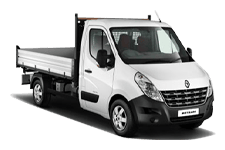
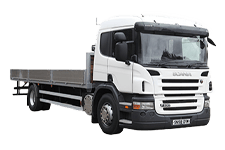
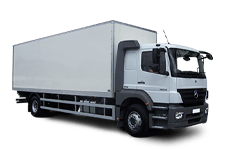
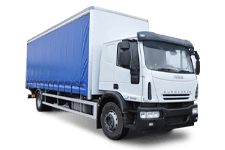
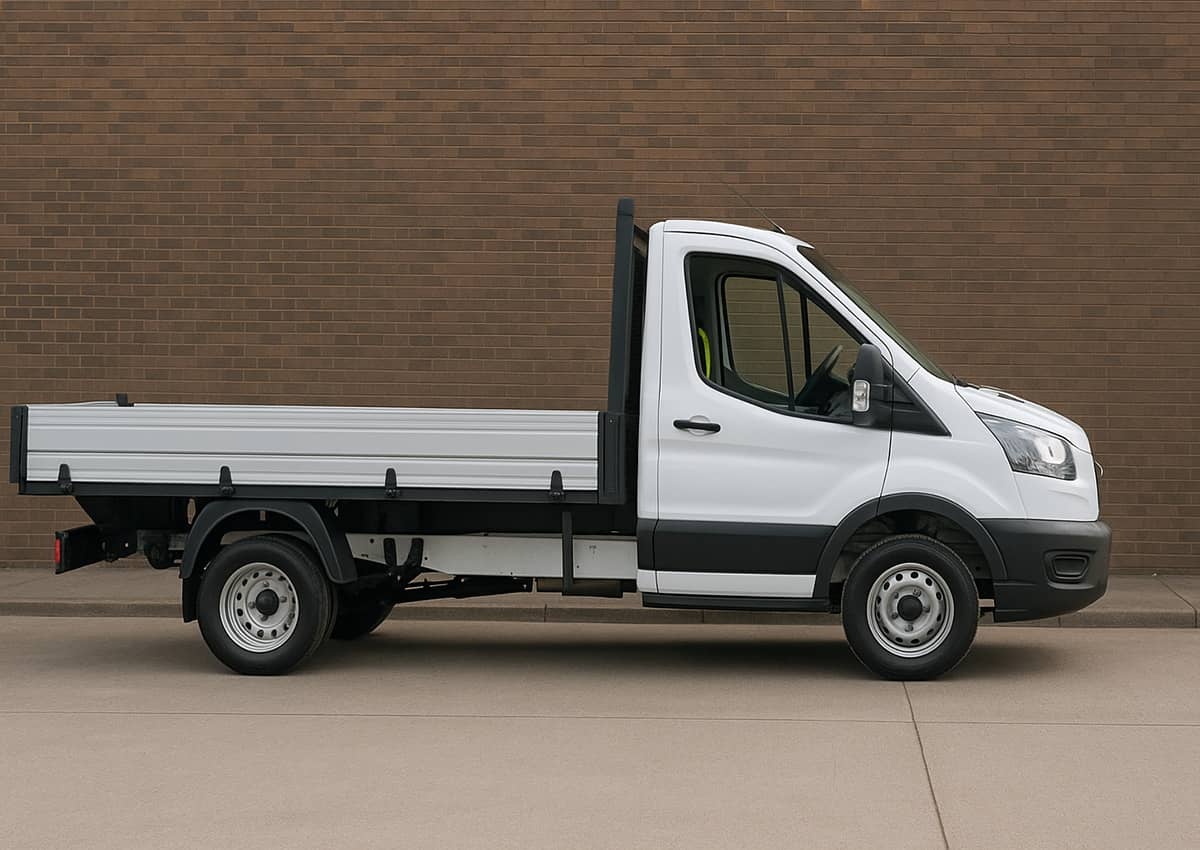
Think of the published bed lengths as categories rather than measurements for your vehicle. A 3 metre dropside suits fence panels, boards cut to size, bagged materials and smaller tools, and it is easier to place on a tight driveway or residential street. A 4 metre body suits long timber, pipe and awkward lengths that would otherwise overhang, while a dropside with a tail lift is worth discussing for palletised or wheeled goods at a destination with no forklift.
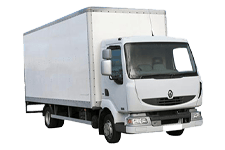
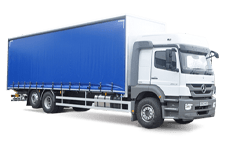
A 7.5 tonne dropside lorry, with a longer and wider deck in its representative listing, becomes relevant for several pallets, scaffold tube or larger machinery, but only if the driver holds the right entitlement, the route and destination can take a lorry and someone has planned the unloading. Before choosing any size, measure the longest item, estimate the total weight honestly and ask the provider to confirm the allocated vehicle's bed length, width, side height and payload.
Sources: Nationwide Hire UK: 3 metre dropside, Nationwide Hire UK: 4 metre dropside, Nationwide Hire UK: dropside with tail lift, Nationwide Hire UK: 7.5 tonne dropside
Gross weight, payload and loading equipment are three different numbers
Gross vehicle weight, also called maximum authorised mass, is the most the vehicle may weigh when fully laden, and it is normally shown on the plate or sticker. Payload is what remains once the vehicle itself, fuel, the driver and any passengers are accounted for. A dropside described as up to 3.5 tonnes does not carry 3.5 tonnes of cargo; its usable payload is a fraction of that and varies between vehicles in the same category.
Loading equipment has its own rating. A tail lift's capacity says what the platform can raise, not what the vehicle can carry, so a load can be within one limit and over the other. Count pallets, packaging and any tools you keep aboard, and remember that axle loads shift as you drop items part way through a job. If the weight is uncertain, use a weighbridge rather than guessing.
Licence entitlement follows the plated maximum authorised mass. A standard category B car licence generally covers vehicles up to 3.5 tonnes, while C1 is needed above 3.5 and up to 7.5 tonnes. Some older licences already show C1, so read what yours actually lists. Check the categories on each driver's current licence, and ask the provider about any age, experience or commercial-use conditions of their own.
Sources: GOV.UK: vehicle weights explained, DVSA: HGV overloading basics, Nationwide Hire UK: dropside with tail lift, GOV.UK: driving licence categories
Restraining the load on an open deck
An open deck gives excellent access but no walls, so restraint does all the work. Official guidance says a load cannot rely on its own weight or friction to stay put, and that the securing method must suit both the load and the vehicle. Do not treat the drop sides as your restraint system unless the provider confirms their rating; straps or chains to suitable anchorage points normally do that job.
At collection, find the anchorage points and check their condition before anything is loaded. Rope hooks and sheeting hooks are not load-restraint points. Ask what straps, chocks or anti-slip matting come with the vehicle, if any, and bring your own rated equipment if they do not. Keep items against the headboard where one is fitted, stop within the first few miles to recheck tension, and recheck again after every partial drop.
Sources: DVSA: securing loads on HGVs and goods vehicles, DVSA: load securing basics, DVSA: ways to secure a load
Side loading, overhangs and unloading at the destination
The main benefit of a dropside is side access, which comes with a condition: the ground must be clear and as level as possible, and nobody should stand where a released item could fall. Lower one side at a time, check nothing has shifted against it before opening, and keep pedestrians and children away from the working side, particularly on a pavement or shared drive.
Agree the unloading arrangements before the day: who is receiving, what equipment they have, where the vehicle will stand and how long it needs. If an item sticks out beyond the rear or sides, measure the projection and check the current official guidance on overhanging loads, since marking and, in some cases, advance notice depend on the measurement. Often a longer bed is the simpler answer.
Sources: HSE: safe loading and unloading, DVSA and DfT: overhanging loads on vehicles
What to confirm with the hire provider before you book
Terms differ between suppliers, and the confirmed booking documents from whichever company supplies your vehicle are what count. Before paying anything, ask for the price, deposit, mileage allowance, insurance cover and excess, fuel arrangement and the collection and return times in writing. Commercial users should also ask whether their intended use is permitted.
Also ask where you will collect and return the vehicle, rather than assuming a local address, and whether the registration can be confirmed early enough for any permission request. Private customers should check that the named driver matches the licence presented, and trades hiring for several people should register each driver in advance. Settling these points before the day saves a wasted morning.
Sources: Third-party reference: Nationwide Hire UK terms and conditions, GOV.UK: driving licence categories